Showing posts with label Post 4. Show all posts

Tuesday, January 26, 2016

Post #4 Shortening Difficult Passages: Segmental (Bar-by-Bar) Practice


Primer Level - Technique and Artistry
Book: Piano Adventures
By: Nancy Faber and Randall Faber


   As mentioned in my previous blogs, a "piece" is another word for the song or sheet of music you have, or are trying to learn. But what are you to do if the piece you are trying to play is way too hard? Well, I've learned that mature and successful musicians don't swallow up the whole thing at once. Oh no. That's suicide. What you have to do is take on one section at a time. Specifically the hard sections first. By doing this, the flow of your music is able to stay, without sacrificing time, grunts, and sweat. "Practicing short segments allows you to practice it dozens, even hundreds of times, in a matter of minutes." (19) Ever heard of the saying "practice makes perfect"? Well in this case, it's 100% correct. When I was learning Canon in C Major, my initial thought was "what the heck do I do here?!" But then the book explained how each hard section has an easy section within. All you have to do is put the little pieces of the puzzle together, and then add them to the song as a whole. (19)
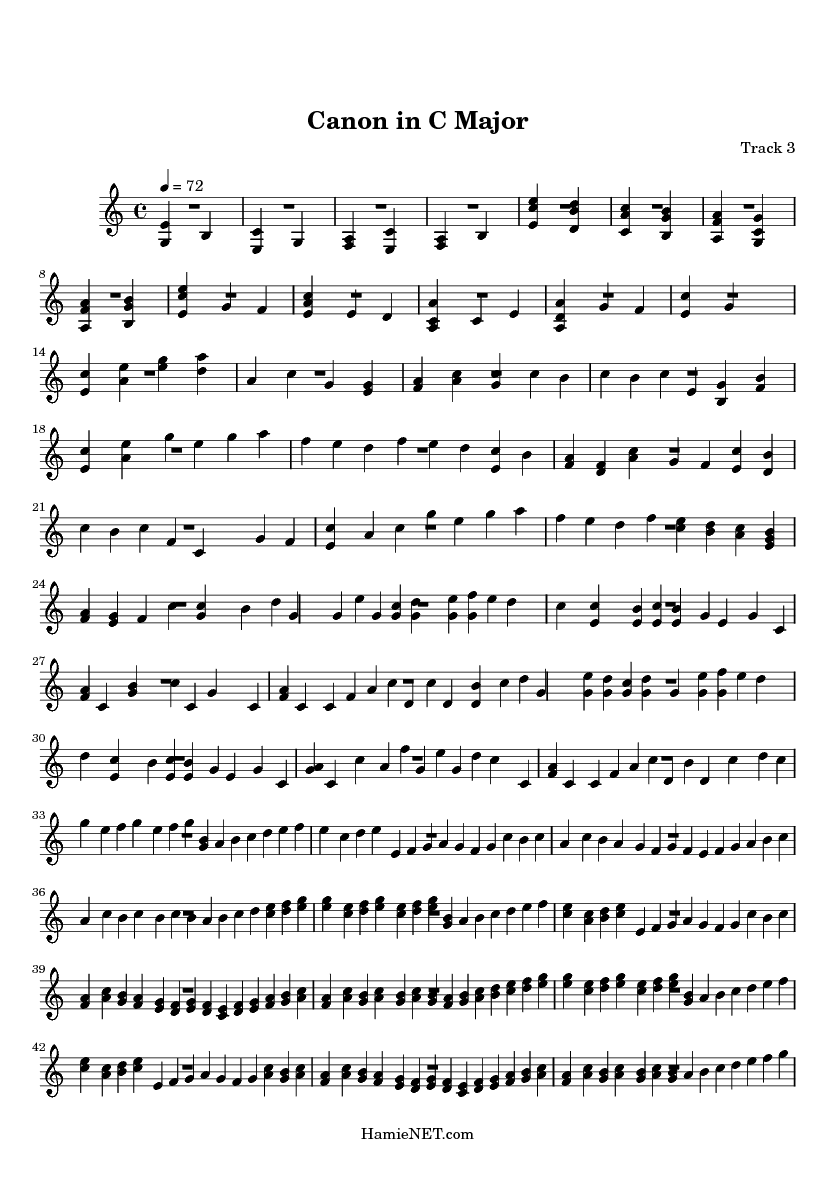
Take a look at lines 36,39, and 42 (last 3 lines). I was really confused and intimidated by all of these singular notes coming at me in rapid succession. But I ended up taking each section one bar at a time. A bar in music signifies how many "counts" or "beats" there are per measure in music. For example: Canon was in 4/4 time. that means each "bar" receives 4 counts per measure. If it were 2/2 time, each measure would get 4 counts. Anyways, I would take on each bar individually. When I felt that I was able to play that bar well, I'd move on to the next one. Pretty soon I had mastered each measure successfully and played the entirety of the song without any hiccups.


What should a musician do if the piece they are playing is far to complicated to play in parts? What technique should be used to easily overcome this?

I was going to upload my finished song here, but blogger seems to hate me. Maybe  I'll upload it soon if anyone wants to come back and check it out.


Finding Yourself & Philosophy

What am I doing, or rather where am I going. Of course I mean in the context of general life, these questions have to have brought up sometime in a person's life. Christopher Phillips approaches these questions in his own Socratic sort of way, though this time he gives himself the answer of "You're moving in the direction of your dreams" (Phillips 135). If you are questioning what you are doing, then you just may be moving in the right direction.
 There is not too much Socratic method to this question, and it seems to be more of a goal, to add more "philosophy" to this question seems to be a stretch. Any more questions that stem from this would seem to be where the philosophy comes in, where you then can find more in your thoughts and expand your horizons. For me, thinking about this question truly makes me want to stop procrastinating, though that's just my thoughts. Philosophy is more than just the Socratic method and Socrates. Philosophy is defined as the nature of knowledge, and that's honestly not too far off.

Monday, January 25, 2016

Mixing Wet and Dry Media


Mixing wet and dry media can add tremendous texture and uniqueness to your portrait. Coating paper with water colors to tone your base (paper) and then going in with hatch marks, or cross-hatch marks when it's dry can make art seem more realistic or 3-dimensional (Thomas 19).

Side strokes with stump blending: 

Broad strokes with stump blending:

Which technique do you think would be used more often?

Thomas, Joy. The Art of Portrait Drawing: Learn the Essentials Techniques of the Masters. New York: F+W Media, 2012. Print.

Post 4--Monochromatic Landscape


Although it often seems like the landscape around us is filled with multiple colors, many landscapes are actually comprised of the same color but in varying values. The different values provide depth, and the depth is what tricks us into thinking the landscape is multi-colored. I decided to attempt to create a monochromatic painting using only the navy blue color in the Prang watercolor palette.

Since I'm not a very advanced painter yet, I felt that it was best to start with a fairly simple landscape of a lake with mountains behind it. The mountains don't have very structured shapes, so I thought it would be easy because it would require simple brushstrokes.


I began by sketching a rectangle to create the dimensions of my painting, which were about 8" by 12". I didn't want to take up an entire page because that would have taken a very long time. Then I sketched my landscape based on this one that Robertson had done.


I started painting the lake first. I used darker values in the foreground, and as I extended the paint closer to the mountains, I used lighter values. To create these lighter values, I combined water with the paint. In my personal experience, water tends to look lighter the closer to the horizon it is. However, Robertson believes that water gets darker the closer to the horizon it is (Robertson 35). Regardless of which way is more realistic, it's true that the values of water change based on its relative location to the horizon.


The water slowly getting lighter as it nears the horizon


Next, I painted the mountains. However, getting the lighting and values of the mountains proved to be much more difficult than I thought. According to Robertson, "mountains in a landscape get lighter in value the farther away they are" (Robertson 35). This means that I had to plan out exactly how much color I wanted to use for each mountain. With each successive mountain, I had to add more water to dilute the paint to create lighter values to achieve the look of realistic mountains.

After I completed the mountains, I painted the sky. Skies, like water, tend to have lighter values the closer they are to the horizon.


Finished landscape


I'm pretty happy with the way this turned out; painting a monochromatic painting was a lot harder than I thought it would be, but being able to accomplish this difficult feat was very rewarding.


What would you recommend doing in order to make landscapes look more realistic?


Robertson, Jeanette. Watercolor 101: Techniques for the Absolute Beginner. New York: Sterling Pub., 2007. Print.