Showing posts with label Caceres Joshua. Show all posts

Tuesday, January 26, 2016

Post #4 Shortening Difficult Passages: Segmental (Bar-by-Bar) Practice


Primer Level - Technique and Artistry
Book: Piano Adventures
By: Nancy Faber and Randall Faber


   As mentioned in my previous blogs, a "piece" is another word for the song or sheet of music you have, or are trying to learn. But what are you to do if the piece you are trying to play is way too hard? Well, I've learned that mature and successful musicians don't swallow up the whole thing at once. Oh no. That's suicide. What you have to do is take on one section at a time. Specifically the hard sections first. By doing this, the flow of your music is able to stay, without sacrificing time, grunts, and sweat. "Practicing short segments allows you to practice it dozens, even hundreds of times, in a matter of minutes." (19) Ever heard of the saying "practice makes perfect"? Well in this case, it's 100% correct. When I was learning Canon in C Major, my initial thought was "what the heck do I do here?!" But then the book explained how each hard section has an easy section within. All you have to do is put the little pieces of the puzzle together, and then add them to the song as a whole. (19)
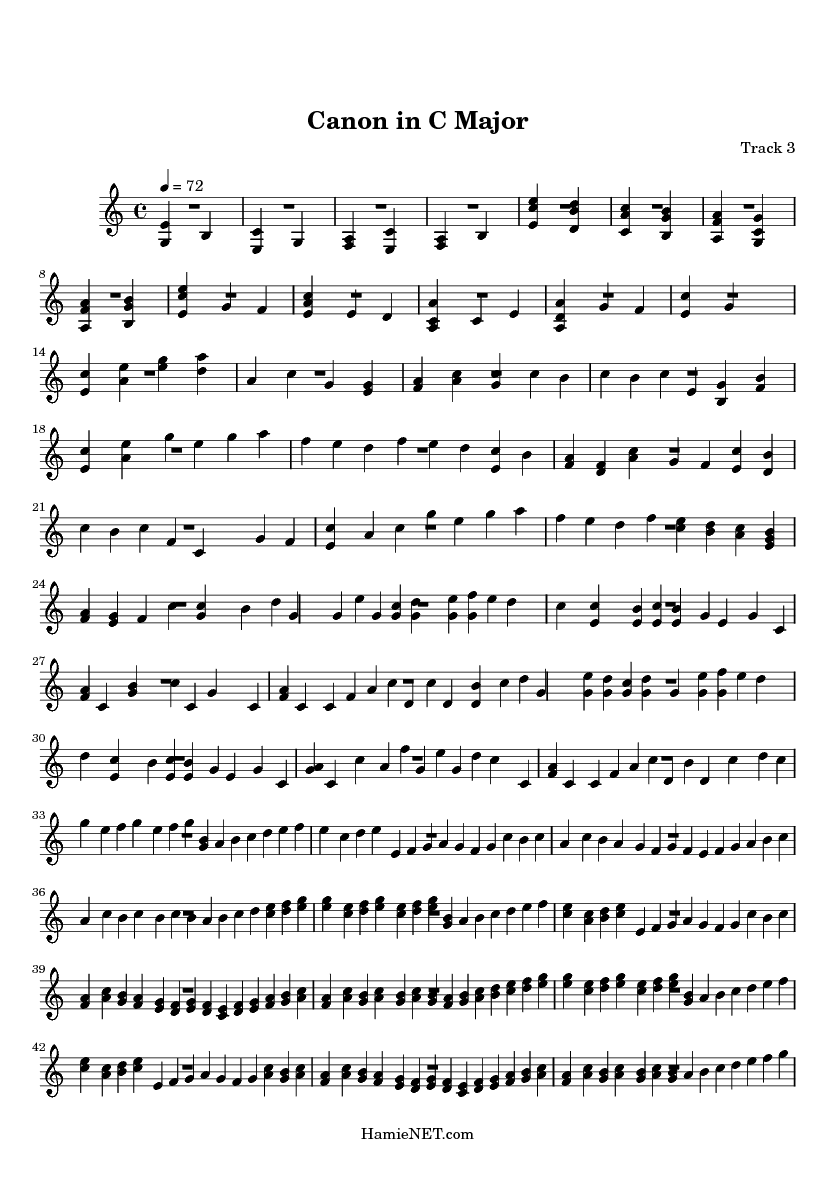
Take a look at lines 36,39, and 42 (last 3 lines). I was really confused and intimidated by all of these singular notes coming at me in rapid succession. But I ended up taking each section one bar at a time. A bar in music signifies how many "counts" or "beats" there are per measure in music. For example: Canon was in 4/4 time. that means each "bar" receives 4 counts per measure. If it were 2/2 time, each measure would get 4 counts. Anyways, I would take on each bar individually. When I felt that I was able to play that bar well, I'd move on to the next one. Pretty soon I had mastered each measure successfully and played the entirety of the song without any hiccups.


What should a musician do if the piece they are playing is far to complicated to play in parts? What technique should be used to easily overcome this?

I was going to upload my finished song here, but blogger seems to hate me. Maybe  I'll upload it soon if anyone wants to come back and check it out.


Monday, January 11, 2016

Post #3 Learning proper chords

Primer Level - Technique and Artistry
Book: Piano Adventures
By: Nancy Faber and Randall Faber 


Now that I've mastered the basics on proper control and technique, the next step is to actually play some notes! Well in actuality, these notes string together to form what is known as chords. "Chords are the base principle of all music pieces, as the song typically revolves around a certain number of sequences." (25) An example of this can be seen with the piece "Canon in C Major" By Johann Pachelbel.

 This is the first piece I learned. The basic, or, main chord is of course; C major.


The chords that I am playing are called "triad chords". This is because I play 3 notes at the same time; and "tri" means 3. Hence, the name. You play these chords to harmonize the beginning of the song with your left hand. Your left hand actually plays four chords at a time, while your right hand only plays three.

The whole song goes is in order of left to right in each column: C, G, Am ,E, F, C, F, and G.

Although you can't see it, I'm having complete control over the flow of the song due to the way my stature of my body and the position of my hands. "A pianist needs to always prepare the next hand position." (21) With my fingers hovering over the keyboard with each note that I play, I am able to move one hand to a new position while the other hand is still playing. 


Suppose the song is a slow tempo. Would it still be beneficial for a pianist to plan his next key change? Remember, a pianist has to think AHEAD of the game when playing the next note; so over thinking might make things complicated.

Monday, December 28, 2015

Post #2 Correct Posture

Post #2 Proper Posture "Karate Pose"
Primer Level - Technique and Artistry
Book: Piano Adventures
By: Nancy Faber and Randall Faber 


     After practicing the skill and technique of proper hand evaluation, next comes good posture.
A proper posture technique allows the individual full access to the keyboard, as well as prevents the hands, arms, and wrists from locking up when playing a lengthy piece of music. In other words, it creates a good "flow" when playing.


The posture that allows for the best mobility and endurance is known as the "Karate Pose".


Proper/Correct Posture:


1. Sit straight and tall on the front part of the bench (I have a broken desk chair. Don't judge me.) "Your body should be centered to the middle of the keyboard." (4) As I mentioned earlier, one main reason that posture is so important is that it allows full access to the keyboard. 

2. Check your distance. You should be positioned so that your arms are straight out in front of you, with your hands perfectly aligned with corresponding keys. "Both arms should be straight out in front of you, forming a 90 degree angle"(4). Same applies for the legs. They should be positioned underneath the piano, so that each foot is resting lightly on the pedals.


Incorrect/lazy posture:


As you can probably see, the distance between me and the keyboard is too much. I'm having to stretch my arms, which causes my muscles to lock and get tired after around 20 minutes of playing. I'm having to shift my weight from the left and right arm in order to reach the keys needed. In other words, it's uncomfortable, non-beneficial, and looks plain silly.

Do you happen to know a famous musician who altered this technique to accommodate his own playing style? Do you think that's the right choice? 

Friday, November 20, 2015

Post #1 Proper Hand Technique and Skill

Primer Level - Technique and Artistry
Book: Piano Adventures
By: Nancy Faber and Randall Faber


There are many who believe that all it takes to play piano effectively, is to "learn the notes". That is definitely not the case. In fact, it's almost utterly impossible to become a skilled musician by simply just "doing". Proper  hand technique and discipline is needed in order to train and develop your muscles, as well build hand-eye coordination.

Proper Technique:


As you can see, the fingers take up each consecutive key, with the thumb always starting on the first note played in your piece (Piece is another word for music). The other four fingers are slightly arched above each key, making movement and key change flow smoothly and effectively. "You always arch your fingers, playing with only the tip of each one; as if you're holding a baseball." (6)


Improper Technique:


People who play incorrectly, tend to spread out their fingers and flatten them. This leads to cramped fingers and locked joints, making rhythm and key flow difficult. They also tend to spread out their fingers on random keys, making the separation of keys and placement of each chord on the piano hard to master. "Improper spacing will not only impair your ability to hit all your key notes in succession, but it will also hinder the fluidity in which the song piece should be played." (6)


Now let's say that your hands are a little bit on the "small" side when it comes to reaching each key. What do you do?